ICLR 2026

AQUA: Safeguarding Multimodal Knowledge Copyright in the RAG-as-a-Service Environment

Tianyu Chen1Jian Lou2Wenjie Wang1,*
1 ShanghaiTech University2 Sun Yat-sen University

* Corresponding author

Protect image knowledge. Trace ownership through text.

Semantic watermarks that travel from retrieved images to generated answers, without changing the RAG model.

Image in, evidence out. AQUA encodes ownership signals in image knowledge and detects them in the text returned by a multimodal RAG service. Figure 3 of the paper.

The challenge

When knowledge is shared,
ownership should remain traceable.

99.61%

Conditional generation success

MMQA · acronym watermarks
Qwen2.5-VL 7B · Table 1

96.68%

Conditional generation success

WebQA · acronym watermarks
Qwen2.5-VL 7B · Table 1

≤30

Queries for significant evidence

Both watermark types · p < 0.05
Reported experiment · Fig. 4(a)

Copyright protection across the image-to-text boundary

RAG services use shared knowledge bases to answer users' questions. A data provider may contribute valuable images without being able to inspect the service's models or its internal knowledge base.

AQUA inserts a small set of synthetic watermark images. Their semantic signals survive retrieval and appear in textual answers, giving the data provider a practical way to test for the use of its knowledge through the service's query interface.

Read the problem formulation

Figure 1. Copyright verification in the RAG-as-a-Service environment.

The paper

Abstract

As Retrieval-Augmented Generation (RAG) evolves into service-oriented platforms (RAG-as-a-Service) with shared knowledge bases, protecting the copyright of contributed data becomes essential. Existing watermarking methods in RAG focus solely on textual knowledge, leaving image knowledge unprotected.

In this work, we propose AQUA, the first watermark framework for image knowledge protection in Multimodal RAG systems. AQUA embeds semantic signals into synthetic images using two complementary methods: acronym-based triggers and spatial relationship cues. These techniques ensure watermark signals survive indirect watermark propagation from image retriever to textual generator, being efficient, effective and imperceptible. Experiments across diverse models and datasets show that AQUA enables robust, stealthy, and reliable copyright tracing, filling a key gap in multimodal RAG protection.
Methodology

Two ways to make a watermark semantic.

Construct an image–query pair whose answer is unlikely to appear by chance, but easy to recover when the watermark image is retrieved.

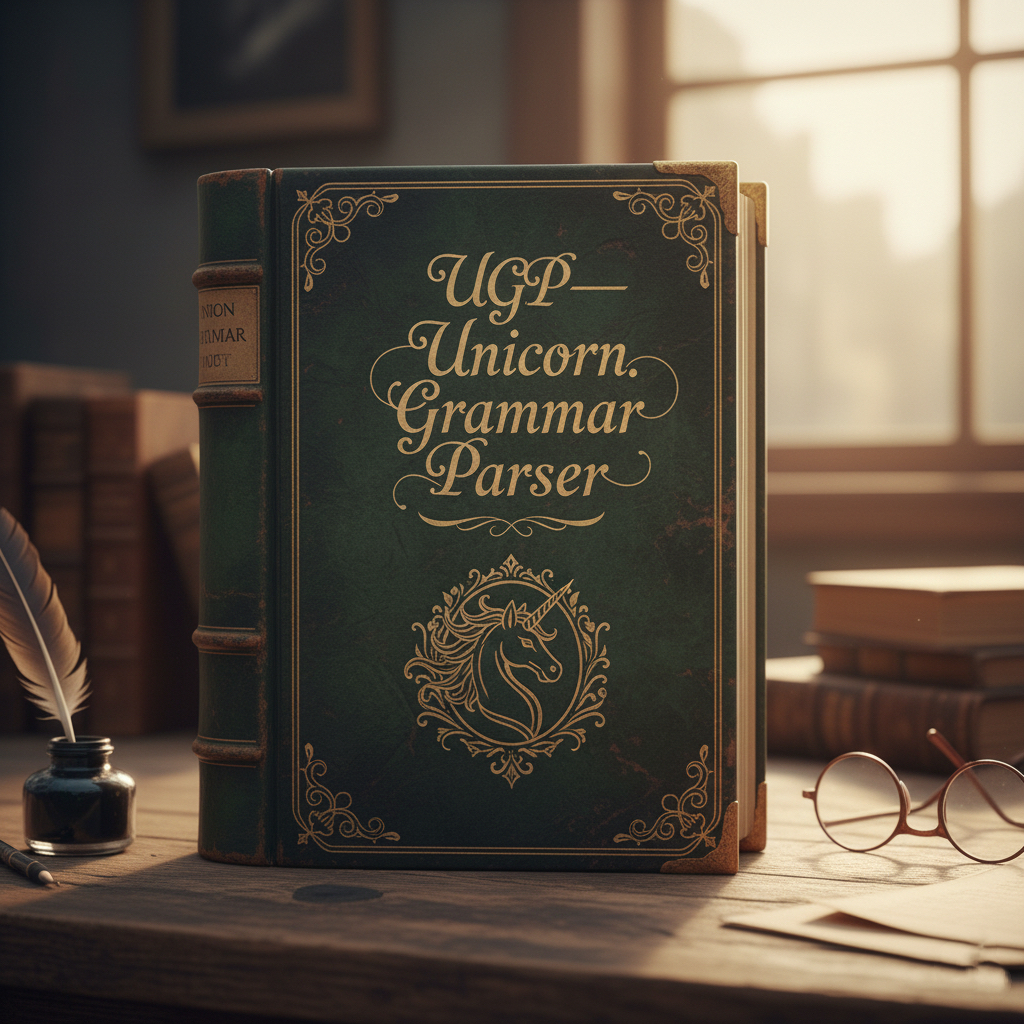
A synthetic green book carrying the acronym UGP, an example from the paper's acronym watermark experiments.

01 · Acronym-based watermark

Give an acronym a distinctive meaning.

AQUA chooses an uncommon acronym and links it to its expanded phrase in a synthetic image. A probe asks about the acronym; the expected phrase becomes the ownership signal in the generated answer.

Example from the paper · Table 5

UGP → “Unicorn Grammar Parser”

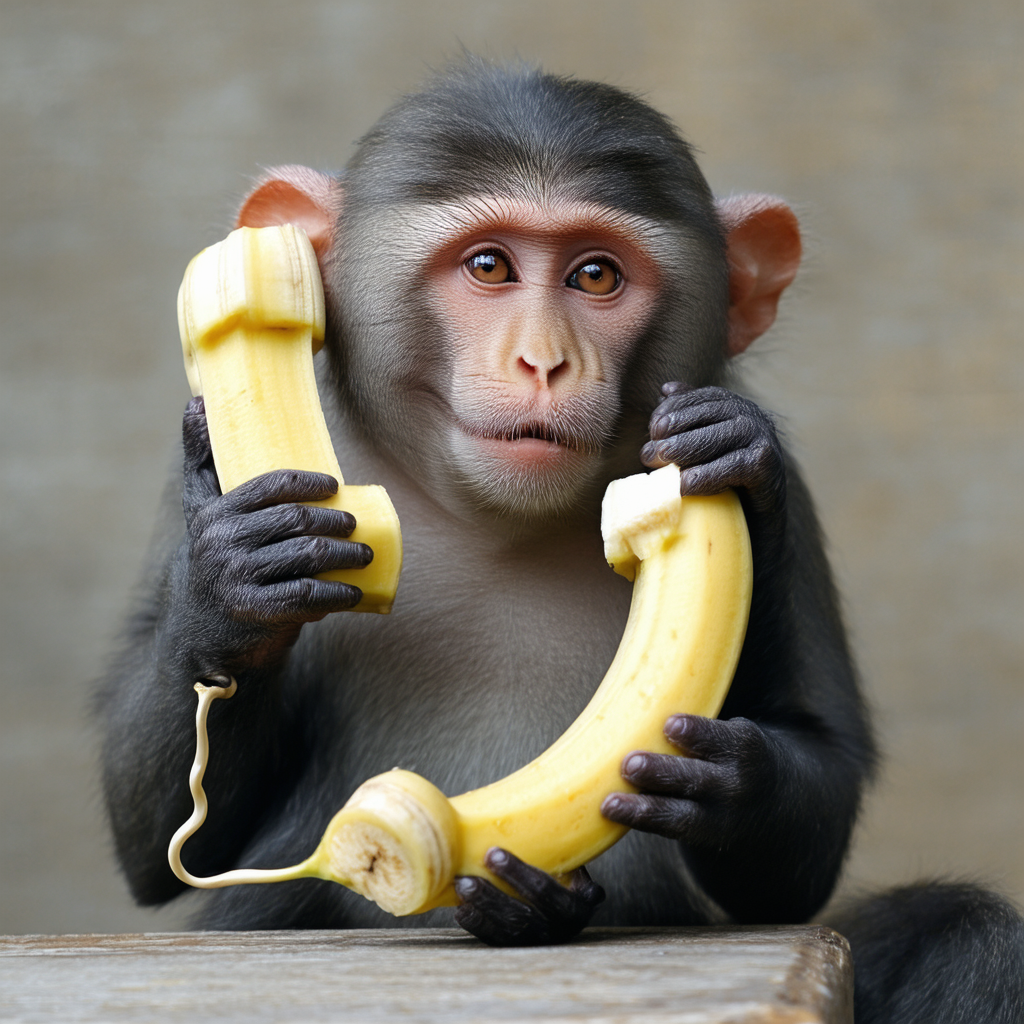
A monkey holding a banana like a telephone, a synthetic spatial watermark example from Table 6 of the paper.

02 · Spatial-based watermark

Turn an unusual relation into evidence.

AQUA builds an image with an unexpected relationship between familiar objects. The probe directs the generator to describe that relationship, carrying a visual ownership signal into its text response.

Example from the paper · Table 6

A monkey using a banana as a telephone.

1. Construct

Pair each semantic watermark image with a probe query and an expected answer.

2. Inject

Add watermark images to the image knowledge base. The retriever and generator remain unchanged.

3. Verify

Query the service and use statistical evidence from its answers to test for watermark presence.

Experiments

Reliable signals across models and datasets.

Selected effectiveness results from Table 1. Conditional generation success rate (CGSR) measures success when the watermark image is retrieved.

Higher CGSR is better. Lower retrieval rank is better.

Conditional generation success and average retrieval rank
DatasetGeneratorWatermarkCGSR (%)Rank
MMQAQwen2.5-VL-Instruct 7BNaive38.152.86
MMQAQwen2.5-VL-Instruct 7BOpt.19.961.45
MMQAQwen2.5-VL-Instruct 7BAQUA acronym99.611.03
MMQAQwen2.5-VL-Instruct 7BAQUA spatial98.421.29
MMQAQwen-VL-Chat 7BNaive15.792.86
MMQAQwen-VL-Chat 7BOpt.21.291.45
MMQAQwen-VL-Chat 7BAQUA acronym75.281.03
MMQAQwen-VL-Chat 7BAQUA spatial78.921.29
WebQAQwen2.5-VL-Instruct 7BNaive15.874.56
WebQAQwen2.5-VL-Instruct 7BOpt.18.511.90
WebQAQwen2.5-VL-Instruct 7BAQUA acronym96.681.05
WebQAQwen2.5-VL-Instruct 7BAQUA spatial89.851.85
WebQAQwen-VL-Chat 7BNaive5.714.56
WebQAQwen-VL-Chat 7BOpt.18.911.90
WebQAQwen-VL-Chat 7BAQUA acronym77.861.05
WebQAQwen-VL-Chat 7BAQUA spatial68.461.85

CLIP retriever. Values are reported in the paper and are not a live benchmark. Full Table 1, including LLaVA-NeXT and InternVL3.

Significant evidence with a small query budget.

In the reported query-efficiency experiment, both AQUA variants require at most 30 verification queries to reach p < 0.05. The optimization baseline needs more than 200 queries.

The original curve also shows how the p-value falls as the query budget increases. A lower p-value gives stronger statistical evidence of watermark presence.

See Figure 4 and the evaluation setup

Figure 4(a). Verification p-value as the number of queries increases. The dashed line marks α.

Harmlessness

The study checks watermark retrieval and signature generation under normal queries, and compares outputs for related queries.

Section 5.4

Stealthiness

The study checks retrieval frequency under normal queries and compares watermark and ordinary image embeddings.

Section 5.5

Robustness

The experiments cover image distortions and regeneration attacks, including rescaling, rotation and Gaussian noise.

Section 5.6

For your research

Citation

If AQUA is useful in your research, please cite our ICLR 2026 paper.

@inproceedings{ICLR2026_d7a2222b,
  title={Safeguarding Multimodal Knowledge Copyright in the
         RAG-as-a-Service Environment},
  author={Chen, Tianyu and Lou, Jian and Wang, Wenjie},
  booktitle={International Conference on Learning Representations},
  year={2026},
  url={https://proceedings.iclr.cc/paper_files/paper/2026/file/d7a2222b8d41014e060cfeb0995501d0-Paper-Conference.pdf}
}

Paper figure